Your skin is not the problem.
It is the signal.
Acne, rosacea, and chronic skin conditions are rarely surface problems. They are the visible output of what is happening underneath: your gut, your hormones, your immune system, your nervous system, and your capacity to repair.
This assessment walks you from what you see in the mirror down to what is actually driving it. Ten questions, about four minutes.
Educational only. This assessment does not diagnose, treat, or replace care from your physician or dermatologist. It is a structured way to organize your symptoms into patterns worth investigating with a qualified practitioner.
Your results are ready.
Where should I send a copy?
Your results load on the next screen. I will also email you a copy along with the eight foundations, so you have the sequence to refer back to.
One email with your results, then occasional education on root cause skin and gut health. Unsubscribe any time. No diagnosis is made or implied.
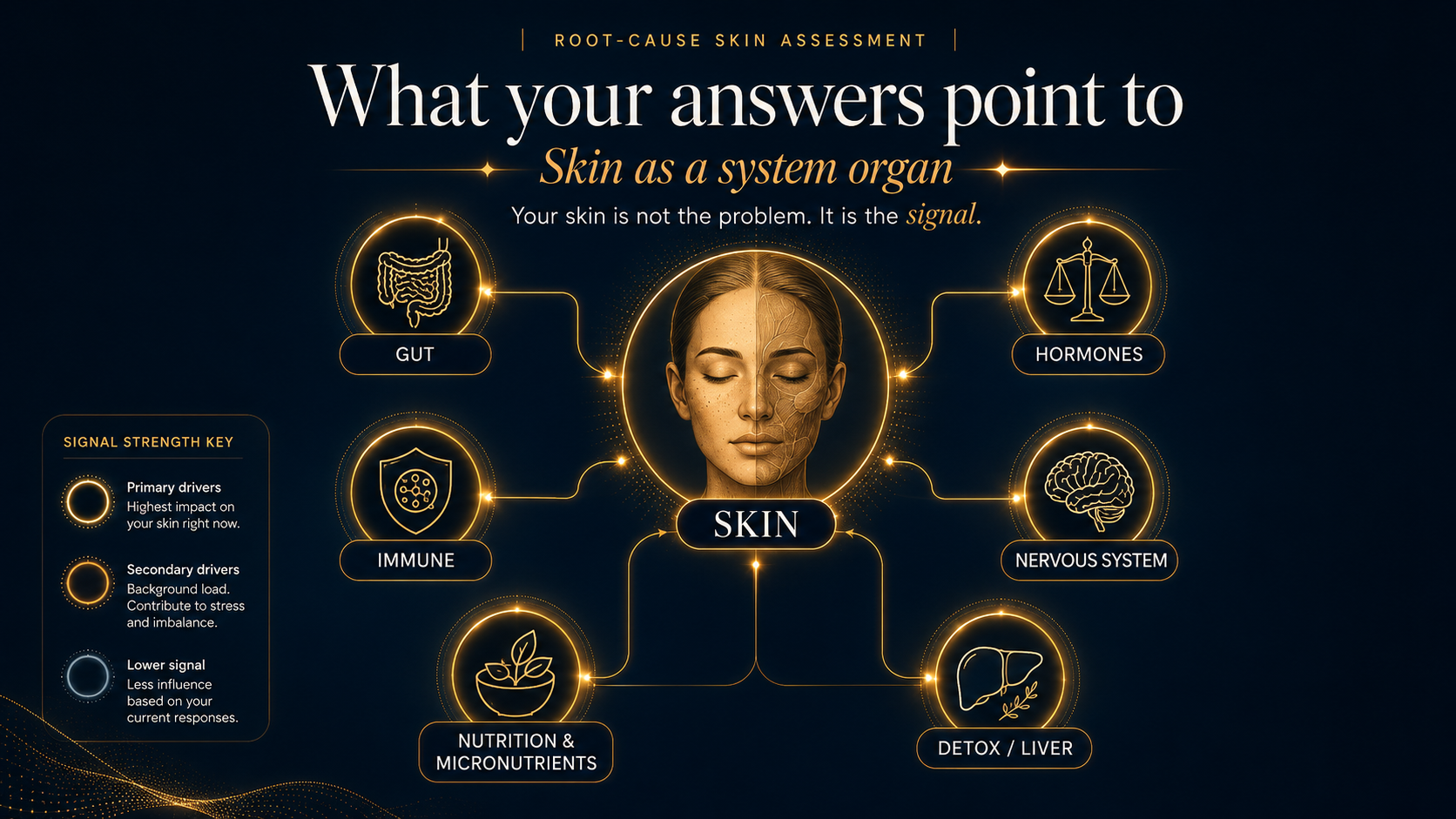
What your answers point to
One diagnosis does not equal one solution.
Two people with identical acne can have completely different drivers underneath. That is why the same prescription works beautifully for one person and does nothing for the next. Hormonal acne is endocrine and metabolic. Fungal acne is microbiome instability. Rosacea is immune and vascular dysregulation. Different labels, same upstream themes.
Your results above are a map of where to look, not a diagnosis. What comes next is the order of operations that actually resolves it.
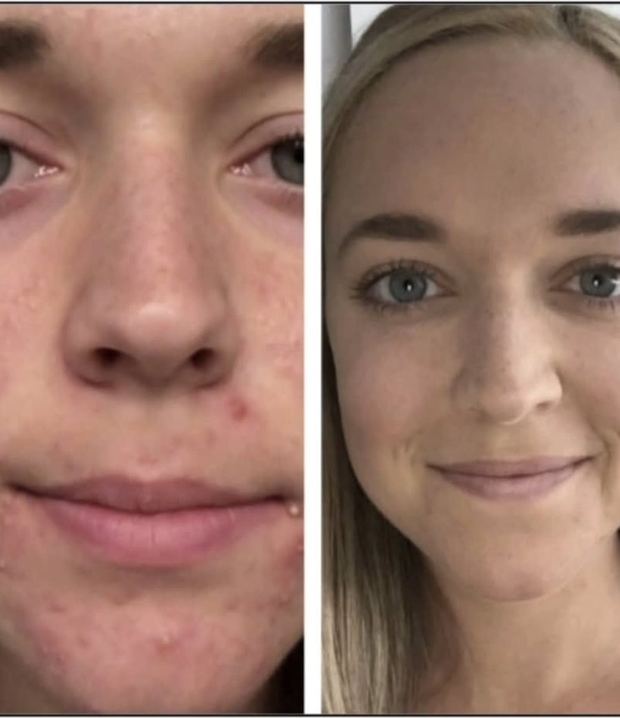
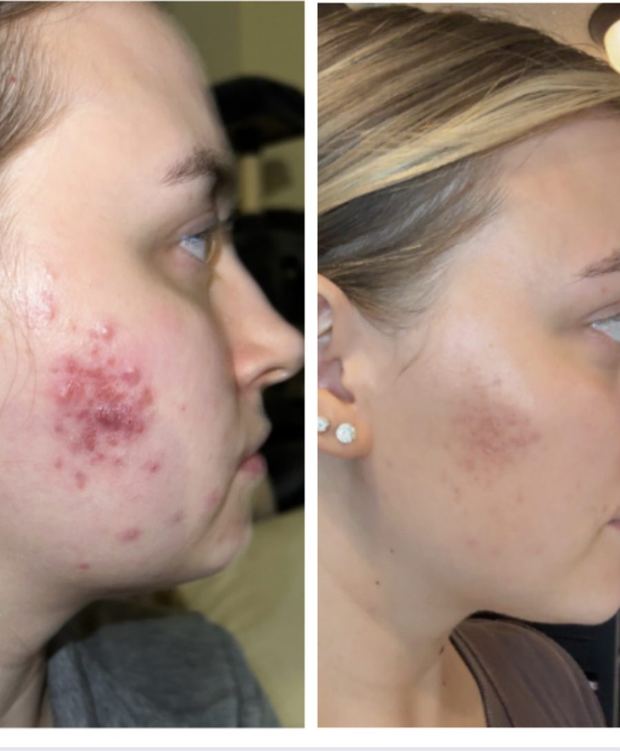
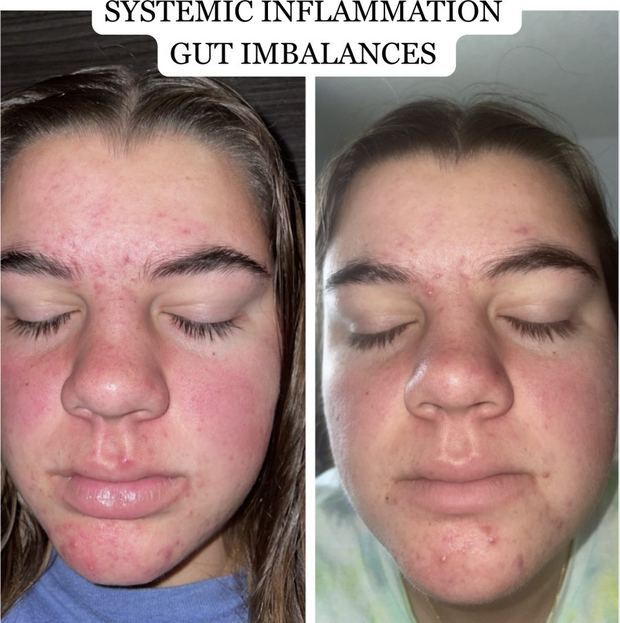
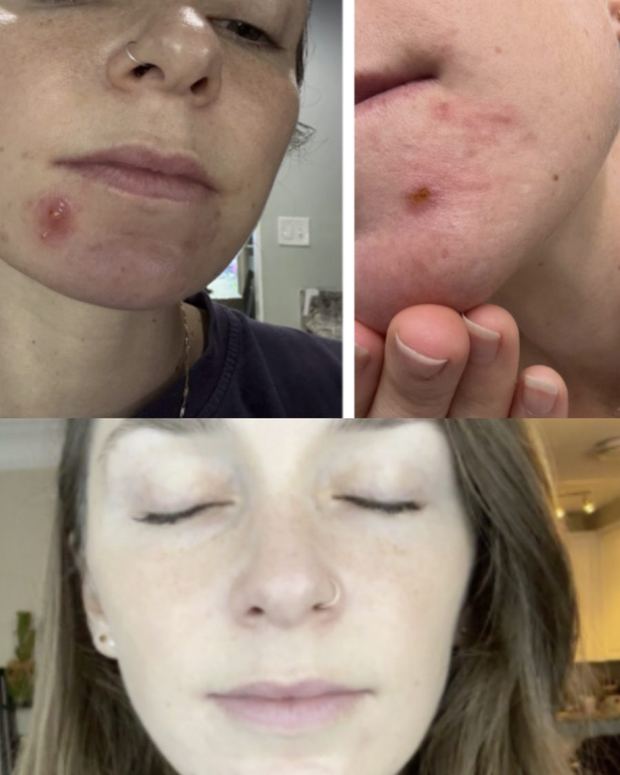
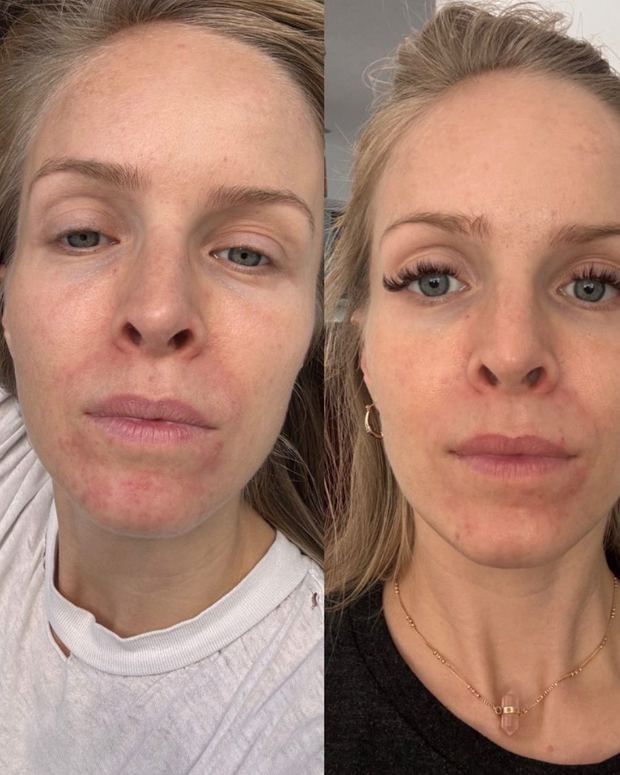
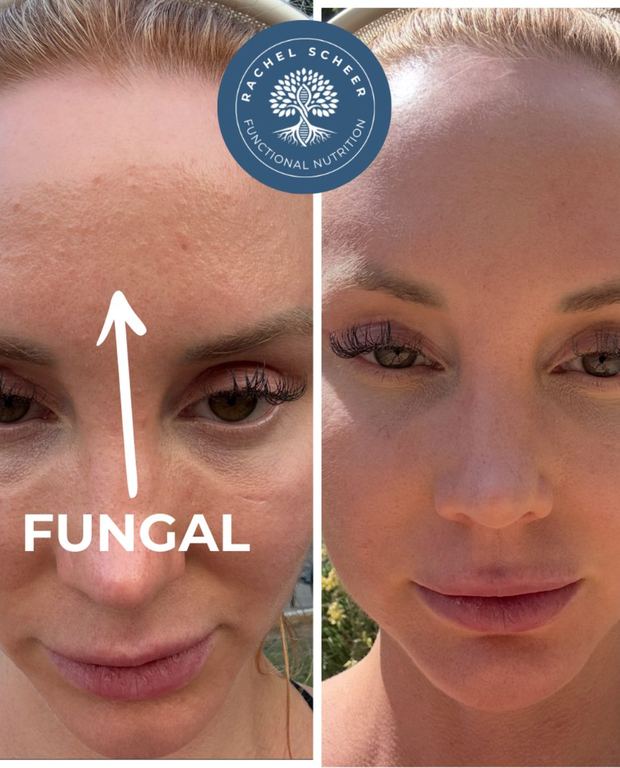
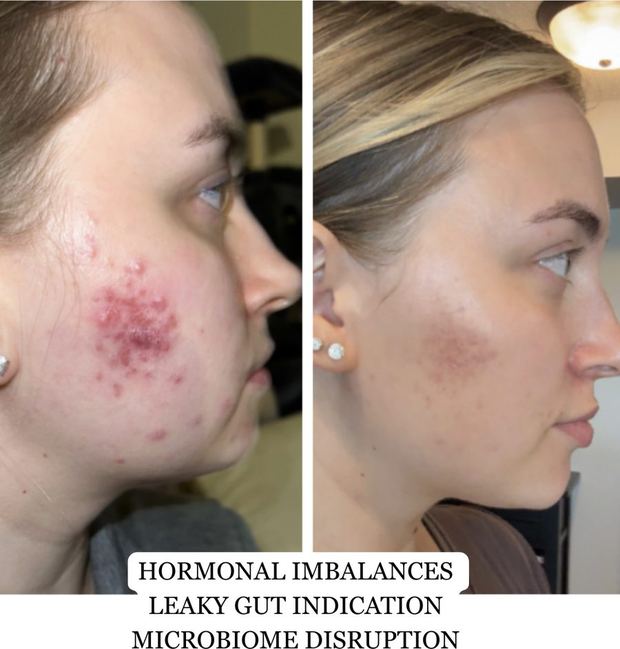
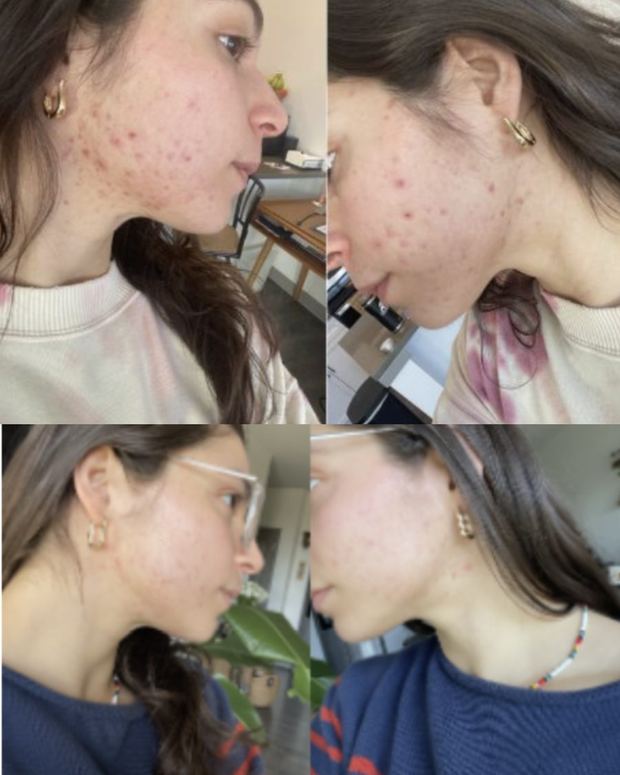
None of these came from a stronger topical. Each one came from correcting the internal drivers first. Results are individual and are not typical of any single protocol.
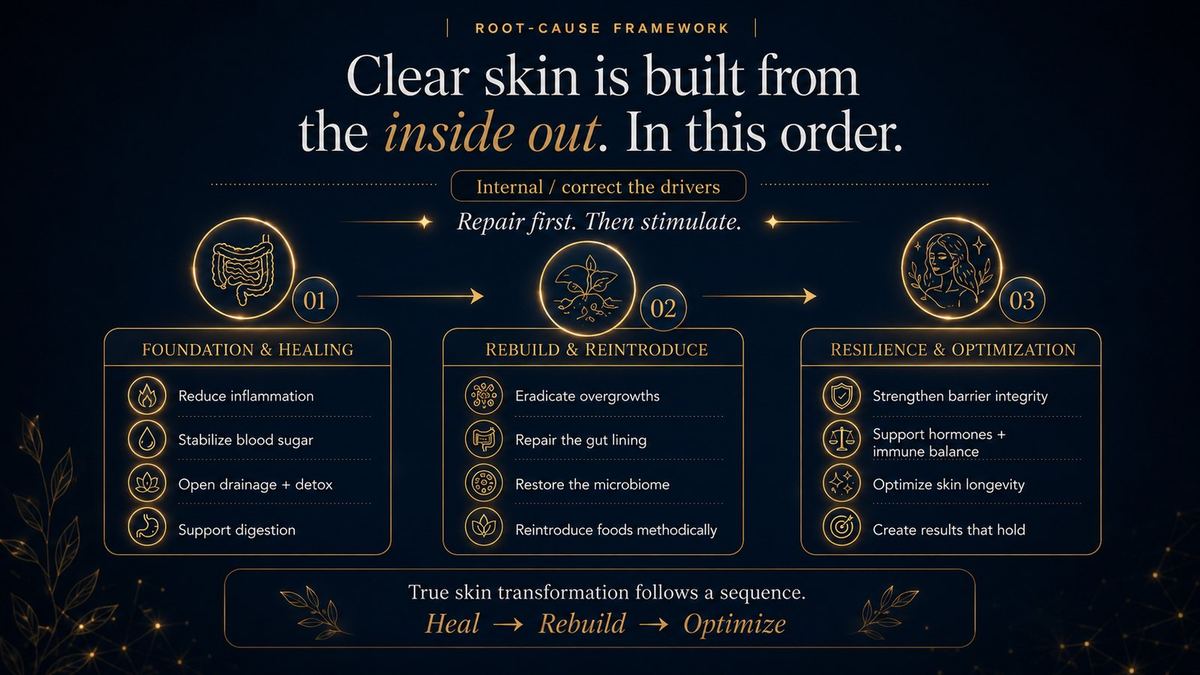
Clear skin is built from the inside out.
In this order.
Most people work this list backwards. They start with the strongest topical or the most aggressive laser, on a system that is inflamed, depleted, and dysregulated. Then they wonder why the results do not hold.
Repair first. Then stimulate. Here is what that actually looks like.
01Nutrition and MicronutrientsThe raw materials your skin is built from+
Skin is one of the most metabolically demanding tissues in the body. It turns over completely about every 28 days, and it is deprioritized when resources are scarce. Your body will always fund your heart and brain before it funds your face. If you are under-eating, chronically dieting, or running low on key cofactors, the skin is where you see it first.
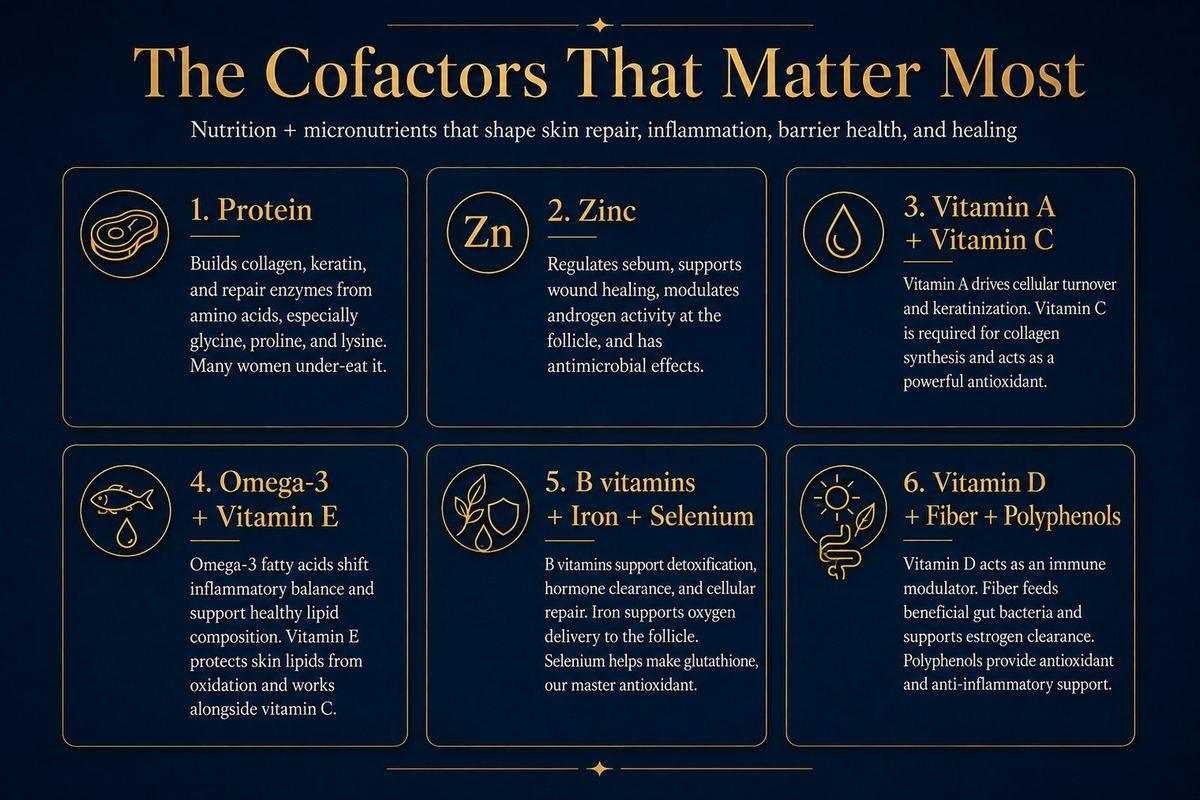
The cofactors that matter most
- Protein. Collagen, keratin, and every repair enzyme are built from amino acids, glycine, proline, and lysine in particular. Most women I work with are eating roughly half of what they need. Eatbeef, bison, eggs, wild salmon, sardines, chicken thighs, Greek yogurt if you tolerate dairy, and bone broth or collagen specifically for glycine.
- Zinc. Regulates sebum production, supports wound healing, modulates androgen activity at the follicle, and is antimicrobial. Low zinc is one of the most consistent findings in inflammatory acne. Eatoysters, which are far and away the richest source, then beef, lamb, pumpkin seeds, crab, hemp seeds, and cashews.
- Vitamin A. Governs cellular turnover and keratinization. Absorption depends on adequate fat digestion and bile flow, which is why gut function sits upstream of this. Eatbeef liver, which is the most concentrated source by a wide margin, plus egg yolks, pasture butter and ghee, and cod liver oil. Sweet potato, carrots, and dark leafy greens provide beta carotene, which has to be converted to retinol, and plenty of women convert it poorly.
- Vitamin C. A required cofactor for collagen cross-linking. Without it, collagen synthesis stalls no matter how much protein you eat. Eatred bell pepper, kiwi, citrus, strawberries, broccoli, brussels sprouts, and parsley. Heat degrades it, so keep some of these raw.
- Omega-3 fatty acids. Shift the inflammatory balance and supply the lipids your skin barrier is built from. Eatwild salmon, sardines, anchovies, mackerel, herring, and roe. Flax, chia, and walnuts give you ALA, which converts to EPA and DHA at a very low rate, so they do not replace fish.
- B vitamins and methylation cofactors. Folate, B12, B6, and riboflavin drive detoxification, hormone clearance, and cellular repair. Eatliver, egg yolks, leafy greens, asparagus, avocado, lentils, salmon, and shellfish.
- Iron and ferritin. Oxygen delivery to the follicle. Low ferritin shows up as diffuse hair shedding and poor wound healing long before it ever shows up as anemia. Eatred meat, liver, oysters, mussels, and sardines. Heme iron from animal foods absorbs several times better than plant iron. If you rely on lentils or spinach, pair them with vitamin C and keep coffee and tea away from that meal.
- Selenium. Required to make glutathione, your primary antioxidant, and to convert thyroid hormone into its active form. Eatbrazil nuts, two or three a day is plenty, plus sardines, tuna, eggs, and turkey.
- Vitamin E. Protects skin lipids from oxidation and works alongside vitamin C to regenerate it. Eatsunflower seeds, almonds, avocado, olive oil, and hazelnuts.
- Vitamin D. An immune modulator more than a vitamin. Relevant in every inflammatory and autoimmune skin presentation. Eatsunlight is the primary source and food is a poor substitute. Fatty fish, cod liver oil, and egg yolks contribute a little. This is one of the few where testing and supplementing usually makes sense.
- Fiber and polyphenols. Feed the bacteria that produce butyrate, and support the estrogen clearance covered in the gut section. Eata wide range rather than a large amount of any one thing. Berries, artichoke, leeks, asparagus, ground flax, chia, extra virgin olive oil, and green tea.
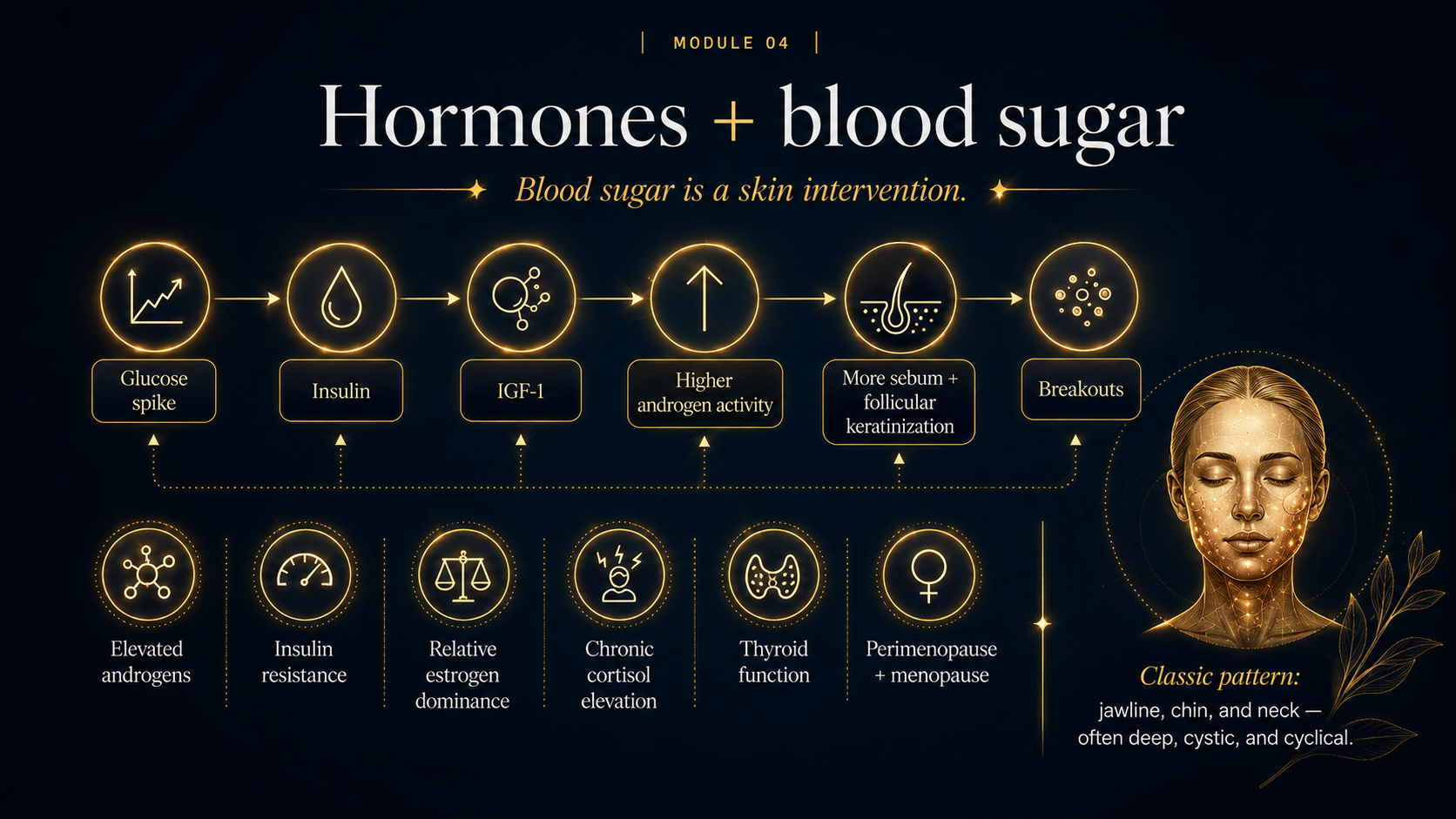
Blood sugar is a skin intervention
This is the one people skip. Every glucose spike raises insulin, insulin raises IGF-1, and IGF-1 does two things directly relevant to your face: it increases sebum production and it increases androgen activity at the follicle. Glycation, the process where excess sugar cross-links with collagen, stiffens and yellows the dermis over time.
02The Nervous SystemThe regulator sitting above everything else+
Your skin has its own stress axis. It produces and responds to cortisol and CRH locally, independent of your adrenals. This is why a stressful week shows up on your face within 48 to 72 hours, and why the most disciplined protocol will underperform in a body stuck in sympathetic dominance.
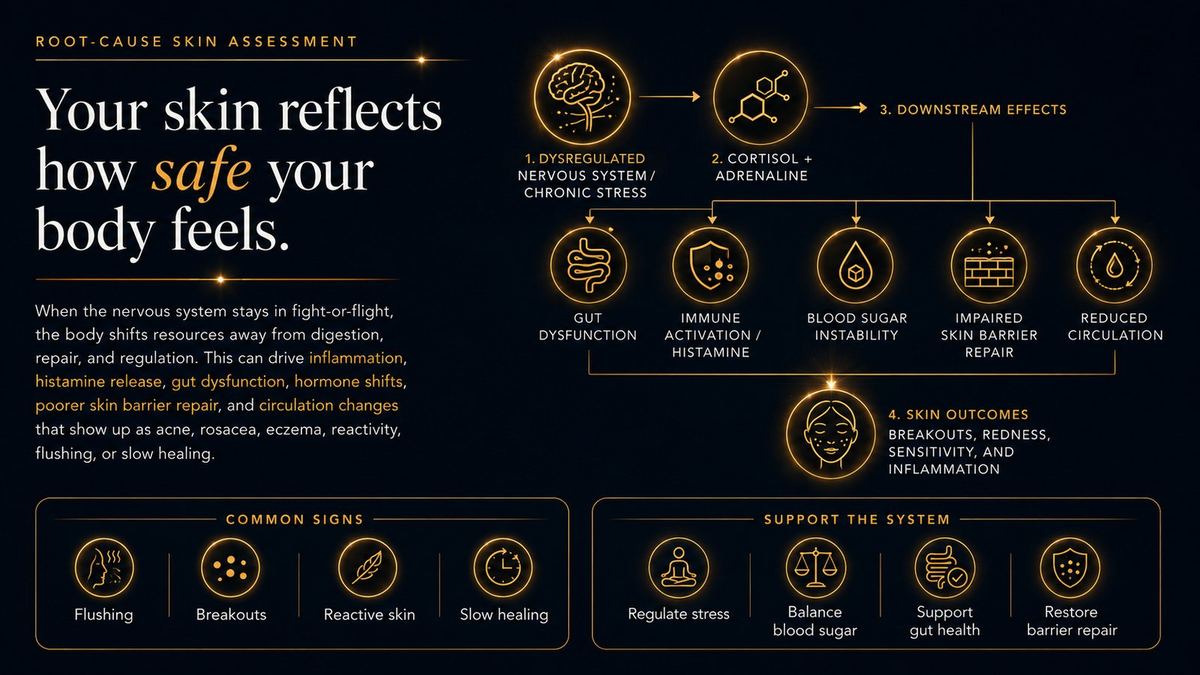
What chronic stress does at the skin level
- Increases sebum production through cortisol and androgen signaling
- Degrades barrier lipids, which raises transepidermal water loss and leaves skin dry, tight, and reactive
- Slows wound healing measurably, so lesions linger and scar more readily
- Activates mast cells, driving flushing, itching, and stinging
- Shifts the immune response toward inflammation and away from tolerance
What it does upstream, in the gut
Digestion is a parasympathetic function. It only runs properly when you are in a rest-and-digest state. Chronic sympathetic tone reduces stomach acid, slows the migrating motor complex that sweeps the small intestine clean between meals, thins the mucosal layer, and reduces secretory IgA. That is a direct pathway to overgrowth and permeability. You cannot heal a gut in a nervous system that thinks it is in danger.
Where to start
- Extend your exhale longer than your inhale for two minutes before every meal
- Get outside within 30 minutes of waking, before screens
- Protect a consistent sleep window. Repair is circadian, and most collagen synthesis happens overnight
- Space meals three to four hours apart rather than grazing, which supports both blood sugar and motility
03The GutThe single highest-leverage system for skin+
The gut and the skin are in constant conversation through four channels: the immune system, hormonal signaling, inflammatory mediators, and microbial metabolites. When the gut is balanced, the skin stabilizes. When the gut is dysregulated, the skin is often the loudest signal you get.
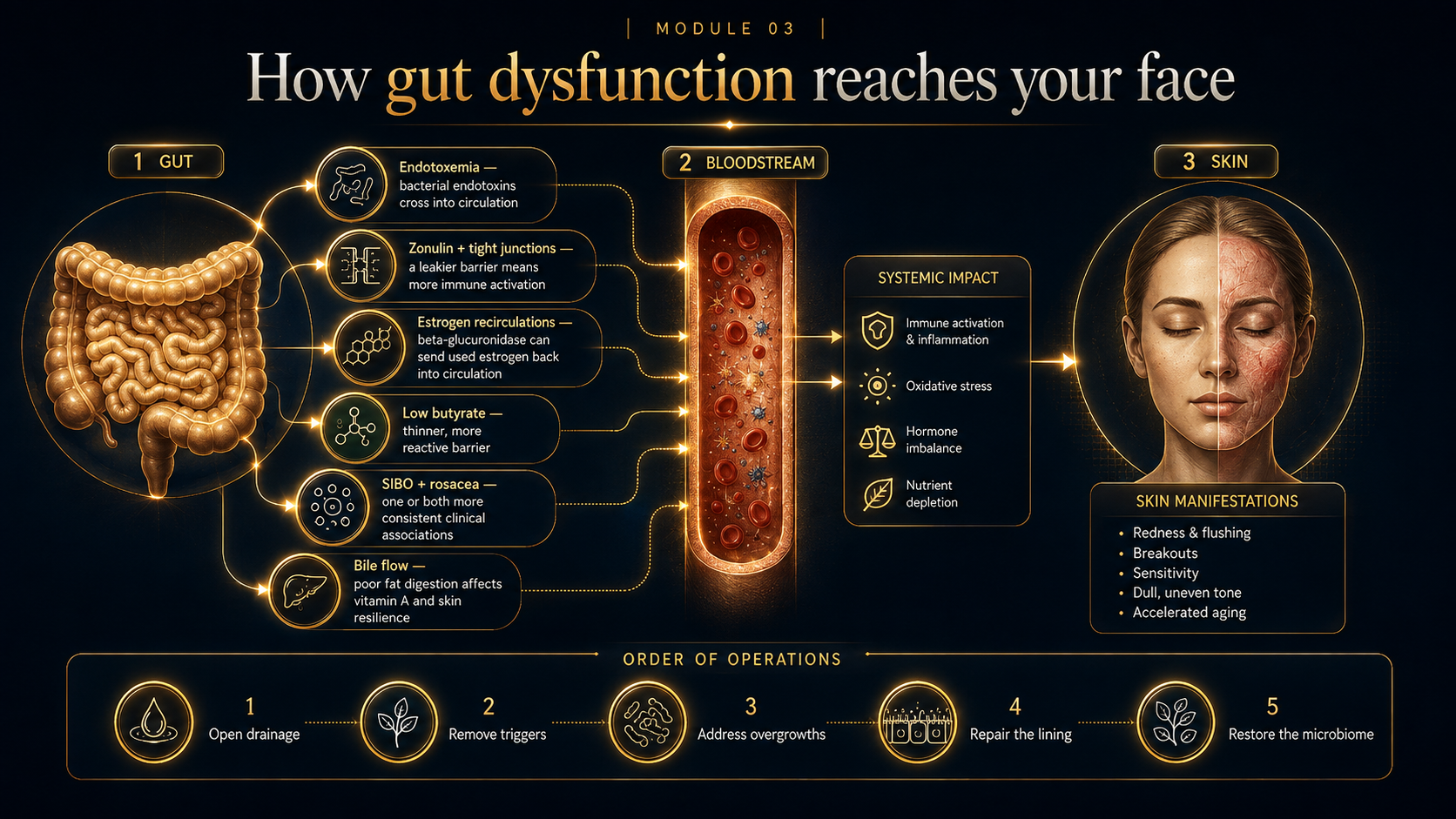
How gut dysfunction reaches your face
- Endotoxemia. When the intestinal barrier loosens, bacterial endotoxins cross into circulation. The immune system responds systemically. Skin is a primary site where that inflammation surfaces.
- Zonulin and tight junctions. Zonulin is the main regulator of intestinal permeability. Elevated zonulin means a leakier barrier, more immune activation, more inflammatory skin.
- Estrogen recirculation. Your liver packages used estrogen for excretion. Certain gut bacteria produce an enzyme called beta-glucuronidase that unpackages it and sends it back into circulation. Dysbiosis is therefore a hormonal problem, not just a digestive one.
- Short chain fatty acids. Fiber-fermenting bacteria produce butyrate, which fuels the gut lining and calms immune activity. Low microbial diversity means low butyrate means a thinner, more reactive barrier.
- SIBO and rosacea. The association between small intestinal bacterial overgrowth and rosacea is one of the more consistent findings in the literature.
- Bile flow. Bile is how you absorb the fat-soluble vitamins A, D, E, and K, which are the skin vitamins. It is also how the liver escorts hormones and toxins out of the body. Sluggish bile means poor absorption and poor clearance at the same time.
The order of operations
Drainage and detox pathways first. You do not want to mobilize anything before the exits are open. Then remove the triggers and stabilize blood sugar. Then eradicate overgrowths. Then repair the lining and restore the microbiome. Reintroduce foods methodically. This sequencing is what separates a protocol that holds from one that relapses.
I created Scheer Gut Essentials because I was tired of sending clients to five different brands to assemble what one protocol actually needed. It is a practitioner-grade line formulated to map onto the phases of gut and skin repair, in the order those phases happen.
- Foundation and drainage. Open the exits before anything is mobilized. Bile flow, liver clearance, digestive support, and the minerals chronic stress depletes first.
- Eradicate and restore. Support through the phase where overgrowths are addressed, alongside micronutrient, enzyme, and methylation repletion.
- Repair and rebuild. Gut lining repair, pre and probiotic support, and rebuilding microbial diversity so the results hold.
- Detox and maintain. Ongoing liver, immune, and antioxidant support once the system is stable.
Which pieces you need, and in what order, depends entirely on what is driving your symptoms. The sequencing matters more than any single product.
Shop Scheer Gut Essentials →These statements have not been evaluated by the FDA. Supplements support the process. They do not replace identifying what is actually driving your symptoms. Check with your practitioner before starting anything new.
04HormonesWhy normal labs do not rule this out+
Hormonal acne is not simply a hormone problem. It is the skin's response to deeper signaling imbalances, usually layered with inflammation, gut dysfunction, and impaired detoxification. This is why suppressing hormones rarely creates lasting resolution. The moment the suppression stops, the underlying signal is still there.
The core drivers
- Elevated androgens. Testosterone, DHT, and DHEA increase sebum output and follicular keratinization. Classic presentation is jawline, chin, and neck, often deep and cystic, often cyclical.
- Insulin resistance and blood sugar dysregulation. Sits upstream of androgens. Insulin lowers sex hormone binding globulin, which raises free testosterone, and raises IGF-1, which drives sebum. This is the mechanism behind the PCOS presentation.
- Relative estrogen dominance. Often a clearance problem rather than a production problem. Depends on liver detoxification capacity and gut microbial balance.
- Chronic cortisol elevation. Competes for the same precursors as your sex hormones and independently drives inflammation and sebum.
- Thyroid function. Underrecognized. Shows up as dry skin, slow wound healing, hair shedding, and a sluggish metabolic picture across the board.
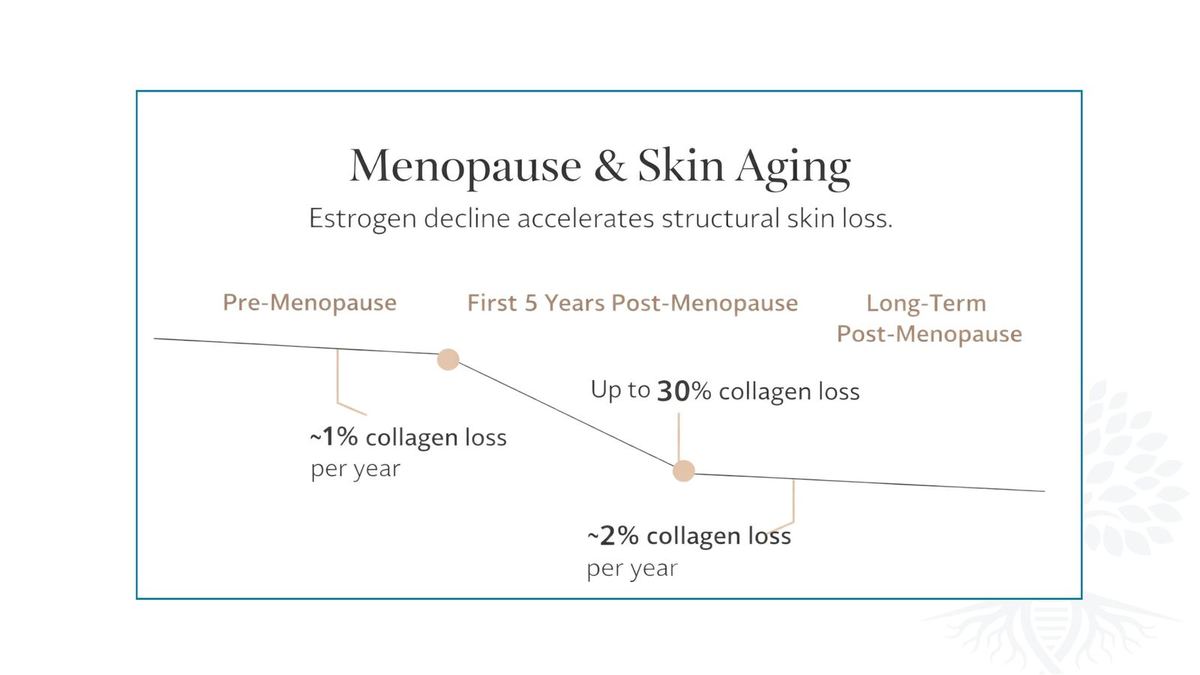
- Perimenopause and menopause. Skin collagen density falls sharply in the years surrounding menopause. Thinning, dryness, laxity, and new sensitivity are hormonal, not cosmetic.
Other androgen signals worth noticing alongside skin: thinning at the scalp and crown, increased facial or body hair, and PMS that has gotten worse over time. Those patterns together tell you far more than any single lab value.
05The Immune SystemReactivity, mast cells, and the loss of tolerance+
Your skin is an immune organ. It is the largest interface between you and the outside world, and roughly 70 percent of your immune tissue lives in your gut, which is why those two systems are so tightly coupled. When immune tolerance is lost, the skin becomes reactive to things it used to handle without incident.
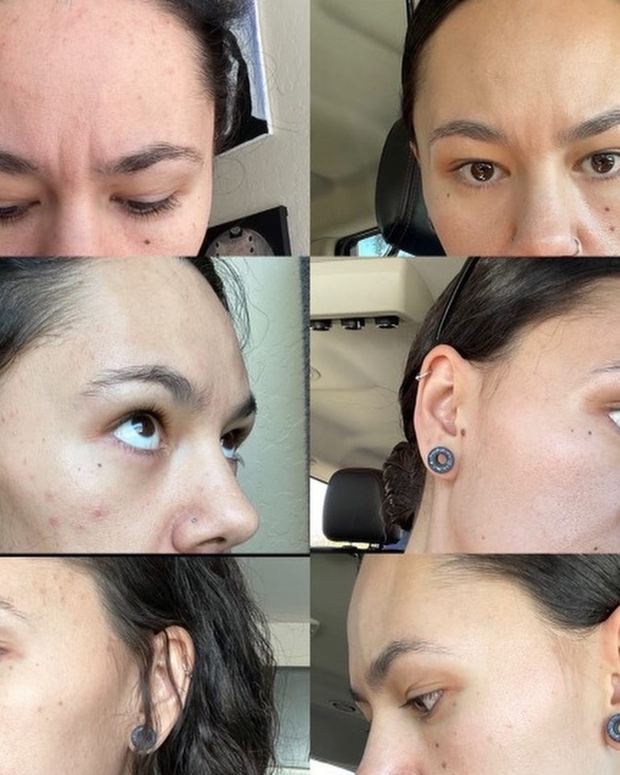
What immune-driven skin looks like
- Rosacea. A neurovascular and immune condition, not acne. Overactive innate immunity, elevated antimicrobial peptides, mast cell activation, and vascular instability. Flushing, persistent redness, visible capillaries, burning and stinging.
- Mast cell activation. Histamine release drives flushing, itching, hives, and stinging. Triggers commonly include heat, alcohol, spicy food, exercise, stress, and fermented or aged foods.
- Dermatitis and eczema. Barrier dysfunction plus immune dysregulation, usually with a gut permeability component underneath.
- Psoriasis. Autoimmune inflammation, strongly linked to metabolic and gut health.
- Expanding food reactions. When the list of foods you react to keeps growing, that is usually not a food problem. It is a barrier and tolerance problem. Removing foods forever treats the symptom.
Rebuilding tolerance
Immune tolerance is built, not suppressed. Microbial diversity, adequate vitamin D, omega-3 status, butyrate production from fiber, a repaired gut lining, and a regulated nervous system all contribute. Antihistamines and steroids can absolutely buy you relief while you do the work. They just do not do the work.
06Topicals and Barrier IntegrityRepair first. Then stimulate.+
Your skin barrier is not cosmetic. It is a biological system that functions as an immune organ, a living microbial ecosystem, a water-regulation system, and your first line of defense against pathogens. I damaged mine badly. Over-exfoliated, over-treated, under-repaired. I was forcing clarity instead of restoring structure.
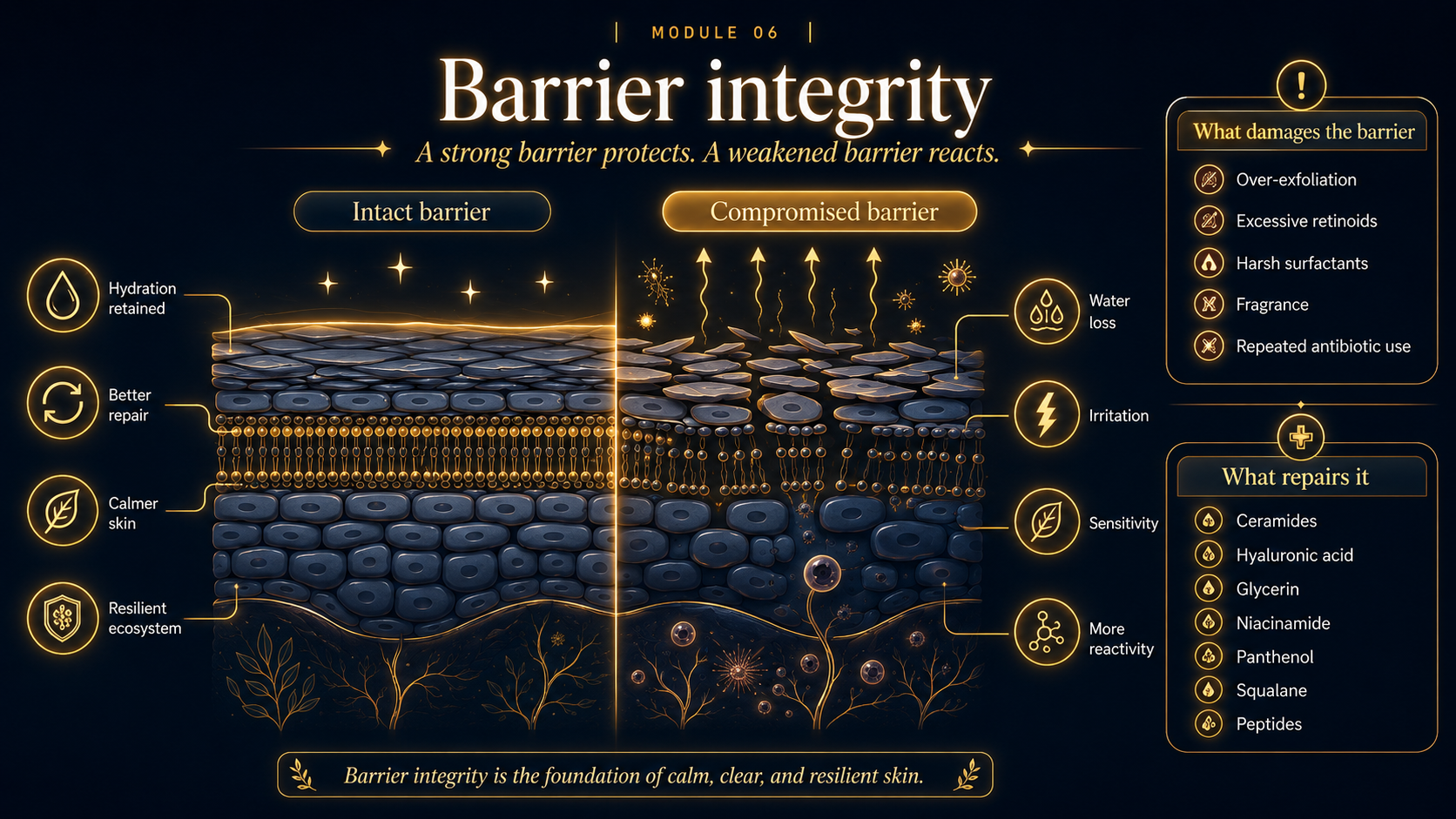
What damages the barrier
- Over-exfoliation with acids and scrubs
- Excessive retinoid use, especially without a repair phase
- Harsh surfactants such as sodium lauryl sulfate, and high-foaming cleansers
- Alcohol-heavy toners
- Chronic topical steroid use
- Repeated antibiotic use, topical and oral
- Fragrance and essential oils
More product does not equal better skin.
What repairs it
- Ceramides. If Malassezia is part of your picture, choose formulas without palmitates, stearates, oleates, or other fatty acid esters that feed yeast.
- Hyaluronic acid and glycerin for non-occlusive hydration
- Niacinamide to strengthen barrier function, reduce inflammation, and improve tone
- Panthenol for soothing and repair
- Squalane as a lightweight, well-tolerated lipid
- Peptides for signaling support
Then, once the barrier holds
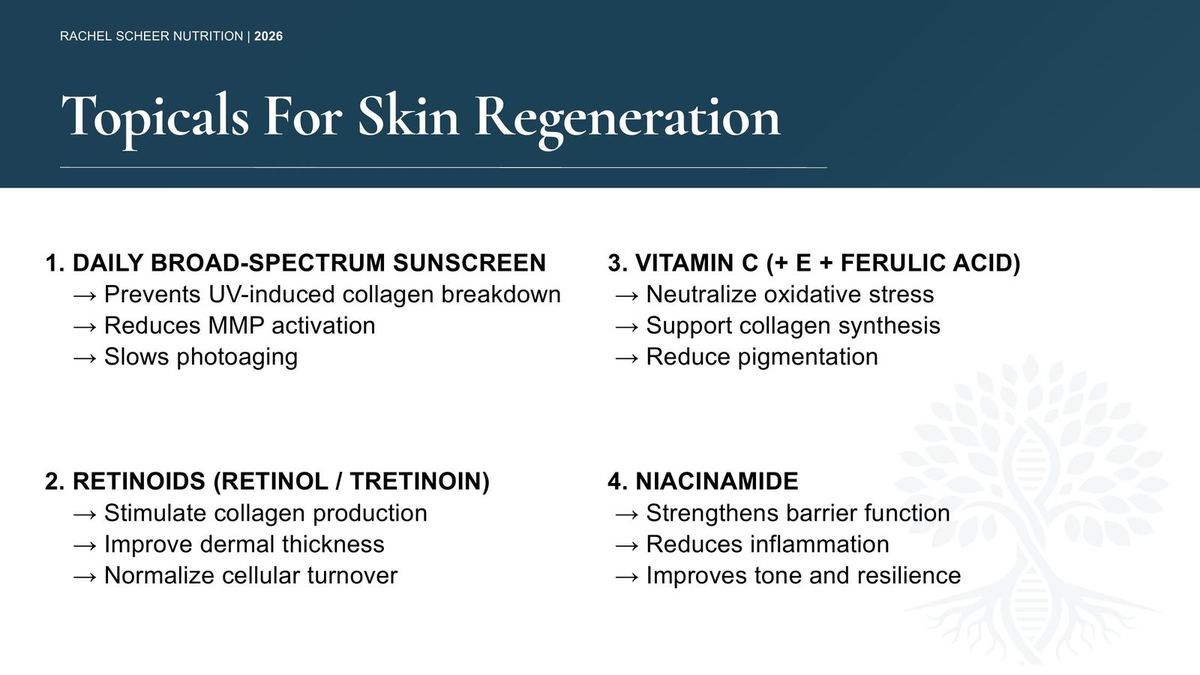
- Daily broad-spectrum sunscreen. Non-negotiable. Prevents UV-induced collagen breakdown, reduces MMP activation, slows photoaging. Prevention matters more than correction.
- Retinoids. Stimulate collagen, improve dermal thickness, normalize turnover. Introduce slowly, on an intact barrier.
- Vitamin C with E and ferulic acid. Neutralizes oxidative stress, supports collagen synthesis, reduces pigmentation.
- Niacinamide, which earns its place in both phases.
Microbiome-conscious barrier support, built on the same principle as everything above: support the ecosystem rather than strip it. This is the system I use on my own skin, and the one I reach for first when a barrier needs rebuilding before anything active gets layered back in.
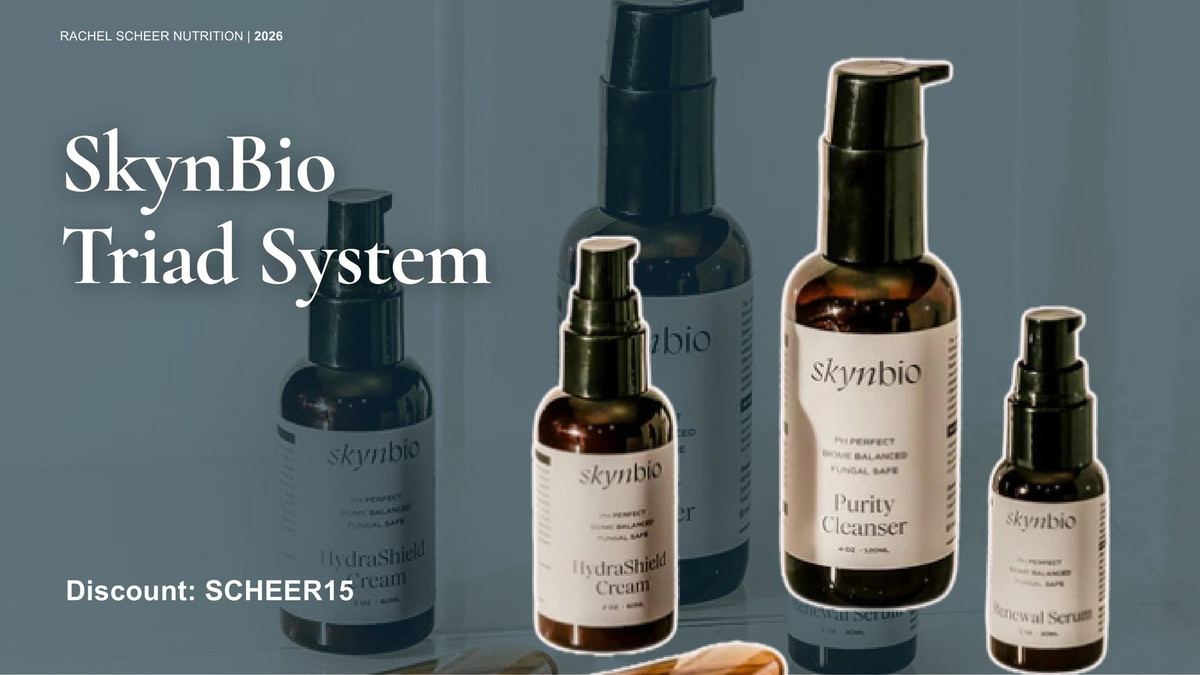 Shop SkynBio, code SCHEER15 →
Affiliate link. Use code SCHEER15 for 15 percent off.
07PeptidesPrecision tools, layered onto a stable system+
Peptides are short chains of amino acids that act as signaling molecules. They direct the body to carry out specific repair, regenerative, and anti-inflammatory functions. They are genuinely remarkable, and they are also the most misused tool in this space.
Topical
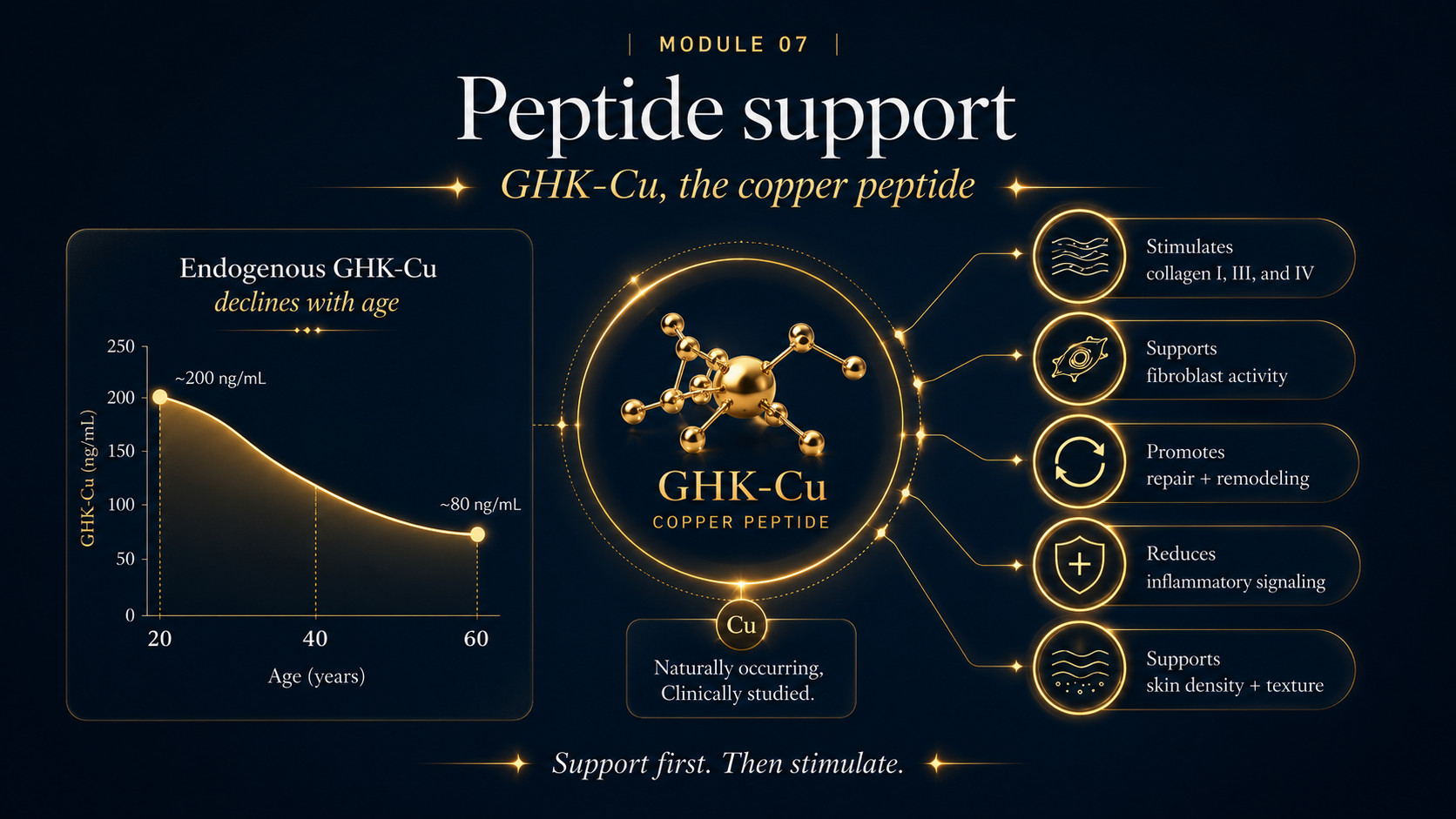
GHK-Cu, the copper peptide. The most clinically validated and mechanistically broad topical peptide available. Plasma levels fall from roughly 200 ng/mL at age 20 to around 80 ng/mL at 60, which makes replenishment meaningful.
- Stimulates collagen I, III, and IV and activates fibroblasts, increasing skin density and reducing fine lines
- Downregulates TNF-alpha and NF-kB, and upregulates superoxide dismutase for antioxidant protection
- Downregulates TGF-beta-1 driven fibrosis, which is directly relevant to scar remodeling and post-inflammatory hyperpigmentation
- Modulates over 4,000 human genes across inflammation, DNA repair, circadian rhythm, and stem cell activation
- Promotes re-epithelialization, angiogenesis, and tissue remodeling
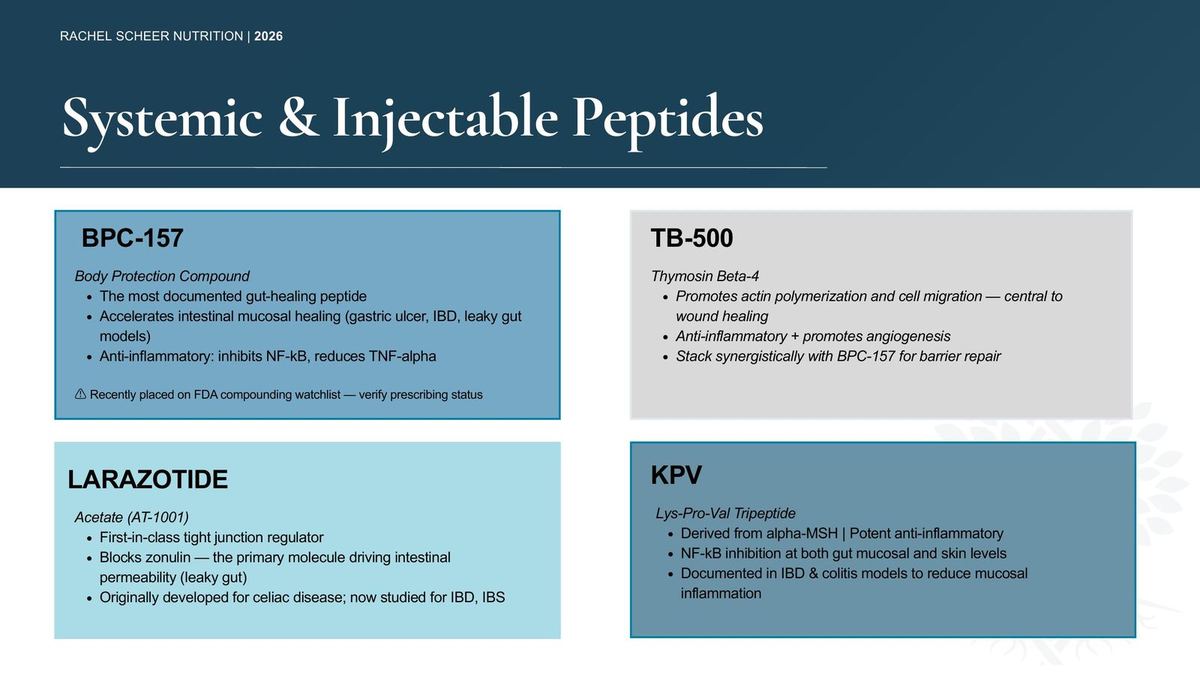
Systemic and injectable
- BPC-157. The most documented gut-healing peptide. Accelerates intestinal mucosal healing in ulcer, IBD, and permeability models. Inhibits NF-kB and reduces TNF-alpha. Note that it has been placed on the FDA compounding watchlist, so prescribing status needs to be verified.
- TB-500, thymosin beta-4. Promotes actin polymerization and cell migration, central to wound healing. Anti-inflammatory and pro-angiogenic. Stacks synergistically with BPC-157 for barrier repair.
- Larazotide acetate. A first-in-class tight junction regulator that blocks zonulin, the primary molecule driving intestinal permeability. Originally developed for celiac disease, now studied in IBD and IBS.
- KPV. A tripeptide derived from alpha-MSH. Potent anti-inflammatory with NF-kB inhibition at both the gut mucosal and skin level. Documented in IBD and colitis models.
Systemic peptides require prescription and practitioner oversight. Sourcing, dosing, and timing all matter, and none of it substitutes for the foundational work.
08Lasers and In-Office ProceduresMy picks, and the rule that governs all of them+
Creates controlled micro-injury that triggers genuine collagen remodeling rather than surface polishing. Works across scar types and improves tone and texture at the same time. Plan on a series rather than a single session, and expect the real results to show up over the months following, as new collagen matures.
Some atrophic scars are held down by fibrous bands tethering the skin to the tissue beneath. No amount of resurfacing from above will lift them, because the problem is the anchor, not the surface. Subcision releases those tethers directly. It pairs well with microneedling afterward to rebuild volume in the released space.
A pulsed dye laser that targets hemoglobin in the vessel specifically, which is why it is the right instrument for persistent redness and broken capillaries rather than a general resurfacing device. Especially useful in rosacea, with an important caveat: it treats the visible vessels, it does not address the immune and vascular dysregulation producing them. Without the internal work, the redness returns.
Delivers energy in ultra-short pulses that shatter pigment photoacoustically rather than by heating the tissue. Less thermal damage means a lower risk of post-inflammatory hyperpigmentation, which matters a great deal in medium and deeper skin tones. The same caveat applies: if the driver is hormonal melasma or ongoing inflammation, pigment will come back unless that driver is addressed.
Sequence everything with sun protection. Daily broad-spectrum sunscreen is not optional before or after any of these, and it is the single highest-return external habit you have for preventing the damage you would otherwise be paying to correct.
You now know where to look.
The harder part is the order.
Knowing that your gut and your hormones are both involved does not tell you which one to address first, what testing is actually worth running, or how to sequence the work so it holds. That is the part I do with clients, and it is the difference between another round of protocols and an actual resolution.

- 01We go through your assessment results and your full history together, including everything that has already been tried
- 02I tell you which root cause I would investigate first, and what functional testing would confirm or rule it out
- 03You leave with a clear sense of the sequence, whether or not we work together
Clear skin is not created by force. It is built through regulation, barrier integrity, and microbiome stability. Rachel Scheer, BS Nutrition and Dietetics, Board Certified Functional Nutrition Practitioner
This assessment is educational and does not diagnose, treat, cure, or prevent any condition. It is not a substitute for evaluation by a physician or dermatologist. Statements about supplements have not been evaluated by the FDA. Peptides referenced require prescription and practitioner oversight, and availability varies by regulatory status. Always consult your healthcare provider before beginning any new protocol, supplement, or procedure.